Nutrition Evidence
Fortified but how much? The challenge of measuring added iron in wheat flour


How much iron is being added to wheat flour during fortification? And how do we know if it’s enough, or too much?
This remains one of the biggest technical challenges in India’s fortification landscape. While India has clear standards from the Food Safety and Standards Authority of India (FSSAI) for iron levels in fortified wheat flour, measuring the actual added iron, not just the total iron content, is a complex process. Accurate measurement is essential to ensure both the safety and effectiveness of wheat flour fortification.
Why measuring added iron matters
Getting the amount of added iron right matters because it directly affects health outcomes.
Iron deficiency anaemia is one of India’s most persistent public health challenges, affecting millions, particularly women and children.
When iron levels in fortified flour are too low, the intervention may fail to make an impact. Too high, and it may pose health or regulatory concerns.
Methods for detecting Iron in fortified wheat flour
There are various methods, ranging from advanced laboratory techniques to simpler field-based approaches, to help determine iron levels in fortified wheat flour.
Table 1. Methods for detecting Iron in wheat flour
S.No. | Method | Description | Advantages | Limitations | Ability to determine added iron content | |
|---|---|---|---|---|---|---|
Laboratory methods | ||||||
1. | Atomic Absorption Spectroscopy (AAS) Flame atomic absorption spectrophotometer (FAAS) |
| It can accurately measure the amount of iron in wheat flour by specifically focusing on iron. | Requires skilled operators, expensive equipment, and extensive sample preparation like overnight ashing. Determines only total iron and cannot differentiate iron salts. | Poor | |
2. | Inductively Coupled Plasma Optical Emission Spectroscopy (ICP -OES) Inductively Coupled Plasma –Mass Spectrometry (ICP – MS) | Detect and measure different elements like iron in a sample by using a plasma to break it down and analyse its light. | Simultaneous determination of iron and other nutritional elements with high accuracy and sensitivity. Detects trace elements at low concentrations with high precision. | Expensive, complex instrumentation and skilled operation is required. Determines only total iron and cannot differentiate iron salts. | Poor | |
Rapid testing methods | ||||||
3. | Titration methods | Measures iron content by adding a solution that reacts with iron until a colour change shows the exact amount present. | Cost-effective and easy to perform | Not suitable for low concentrations; requires manual handling. | Moderate | |
4. | X-ray Fluorescence (XRF) & Energy-dispersive X-ray fluorescence (EDXRF) | These are techniques that use X-rays to quickly detect and measure the elements present in a material without damaging it. | An advanced method to determine the micronutrient content in the plant samples without destroying the sample | Lower sensitivity compared to other methods Not widely tested in the field | Moderate | |
5. | Colourimetric/Spectrometric-based Chromogenic methods | Iron reacts with chromogenic reagents to form a coloured complex, measured visually or spectrophotometrically. | Cost-effective, accessible and can differentiate between iron forms - it can determine added iron. | The presence of other substances in the sample can affect the results, and the method cannot detect very small amounts of the substance being tested. | High | |
6. | Iron spot test | Visual field test using thiocyanate and hydrogen peroxide, providing rapid determination of added iron. | Portable, rapid, and low-cost, suitable for field use. | It can only show if iron is present, but doesn’t provide exact measurements. The results can also be influenced by other substances in the sample. | High | |
Key challenges in determining added iron in wheat flour
1. Natural vs. Added Iron: A Complicated Distinction
Wheat contains natural iron. The challenge lies in accurately determining how much iron has been added during fortification. Most of the laboratory methods determine only the total iron content. When these methods are used to test fortified wheat flour, they provide the total iron content, which includes natural iron from wheat and added iron.
2. Challenges in Sampling Fortified and Unfortified Flour
There is one way to determine the added iron content using these conventional methods. We can test fortified wheat flour samples and unfortified wheat flour samples from the same batch. Subtracting the total iron content of the unfortified sample from that of the fortified sample will give us the added iron content. But the key challenge here is that the natural iron content in wheat flour can vary from lot to lot, and getting both the fortified and unfortified samples from the same lot every time is difficult. This limits the accurate estimation of the added iron content.
3. Testing Limitations: Qualitative vs. Quantitative Methods
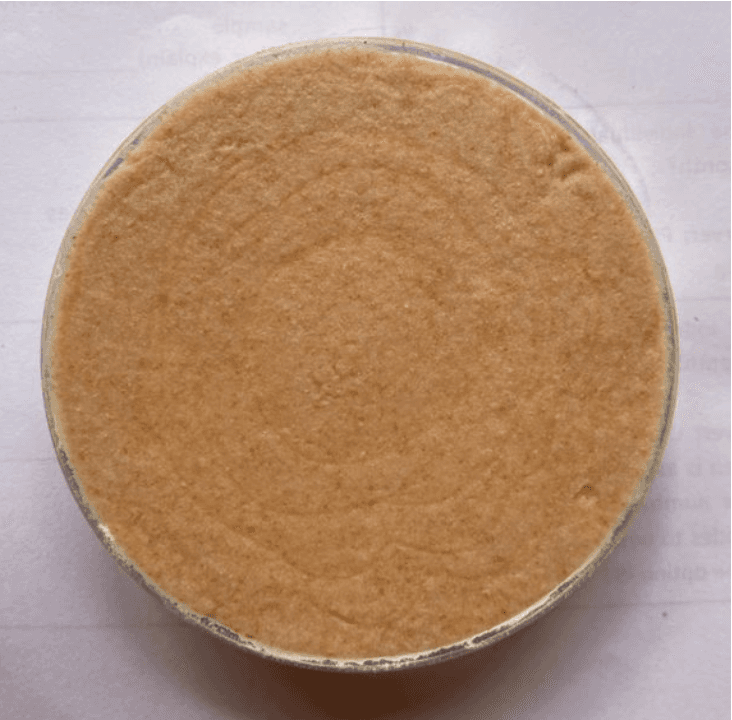
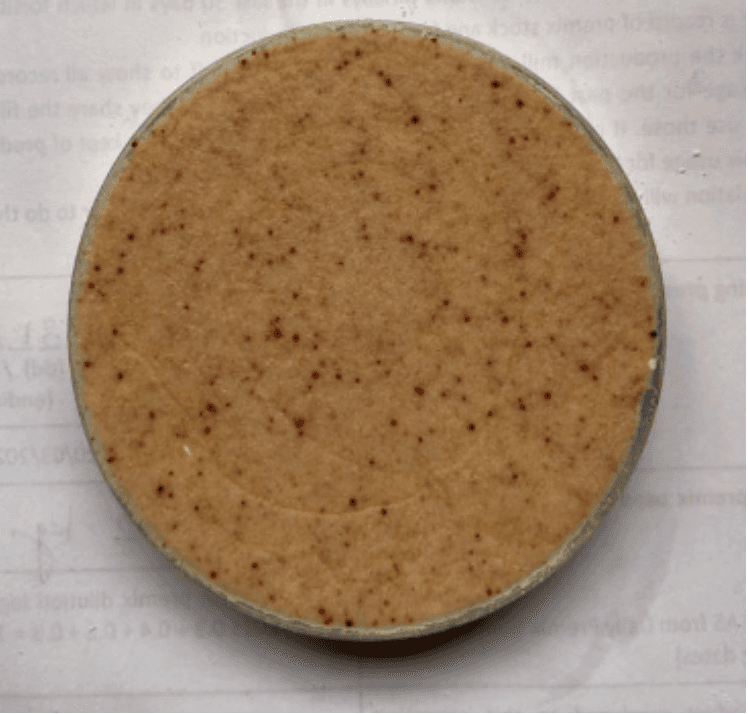
Although most of the laboratory methods, like AAS and ICP-OES, measure only the total iron content, there is one test that can detect the added iron. It is known as the Iron Spot Test (IST). It produces red coloured spots in proportion to the added iron present in the sample. However, the problem is that counting these spots and estimating the exact amount of added iron is very difficult. Thus, we can use IST only in a qualitative manner. Colourimetric methods offer better detection of added iron and iron salt types but have sensitivity limits. Techniques like EDXRF show promise for rice but might have limitations on powdered materials like wheat flour and hence need validation.
Figure 1. Iron Spot Test - Unfortified and fortified atta (confirm presence of added iron)
4. Variability in Iron Fortificants
Different iron compounds used in fortification, such as ferrous sulfate, ferrous fumarate, and NaFeEDTA, interact differently with wheat flour. Some dissolve easily and are more bioavailable, while others are less soluble and harder to detect. Encapsulated iron, which prevents changes in flour colour and taste, further complicates measurement.
Inconsistencies in testing methods across different laboratories and regions lead to discrepancies in reported iron levels. Without standardised protocols, comparing results becomes difficult, making regulatory compliance more complex.
Overcoming the challenges
To make sure that fortified wheat flour meets the right amount of added iron, a reliable testing method is essential. Colourimetric methods can differentiate between iron forms and can determine added iron. Unlike expensive and complex lab instruments, colorimetric tests are affordable and portable. This makes them practical for field testing, especially in regions where access to high-end lab equipment is limited.
Fortify Health is working on identifying and validating a method that can selectively determine added iron in fortified wheat flour. By refining analytical techniques, the organisation aims to develop an accurate and accessible testing method that differentiates between natural and added iron. This approach will improve fortification monitoring, enhance quality control, and support regulatory compliance, ensuring that fortified wheat flour delivers its intended nutritional benefits effectively.
Want to stay updated on our work to improve food fortification in India?
Subscribe to our newsletter for more insights, stories, and research.
Related blog